83 Westgate,
Wakefield,
WF1 1EP
Phone: 01924 831114
Email: info@unityhall.co.uk
Mon — Friday: 9am — 5pm
Saturday – Sunday: Closed
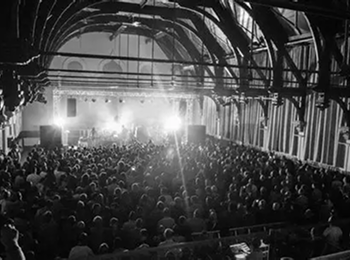
Unity Hall was built in 1876 as a co-operative retail and social hub, expanded in 1902 with Gothic architecture. It hosted diverse events from ballroom dances to legendary 1970s-80s music acts like The Pretenders and Iron Maiden. After the 1990s decline and closure, community fundraising enabled a £4 million restoration.

1876 – Built for the Co-operative Movement
Unity Hall was created by the Wakefield Industrial Society, a cooperative founded largely by staff from the city’s prison. Its purpose was to provide both retail space and a social hub for the community. Designed by W. & D. Thornton, the original Westgate building stood out with russet brickwork, tall arched windows, and Venetian Gothic details. Ground-floor shopfronts offered everything from groceries and provisions to boots and shoes, making it a bustling centre for trade in Wakefield.
1904 – Expanded for a Growing City
As Wakefield’s population and ambitions grew, architect A. Hart was commissioned to extend the building. His work added a grand Westgate frontage and a striking Gothic-traceried window, filling the main hall with natural light. The extension increased capacity and solidified Unity Hall’s position as an architectural landmark in the city centre.
Early 20th Century – A Community Stage
From its earliest days, Unity Hall served as more than a store. It was a venue for markets, public meetings, ballroom dances, wrestling contests, and early cinema screenings. For decades, it filled the role of a civic performance space in a city that often lacked a dedicated theatre.
1950s-1970s – Music, Dance & Culture
Post-war years saw Unity Hall’s ballroom alive with music from big bands and variety acts. The building hosted everything from trade fairs to amateur dramatics, making it a cornerstone of Wakefield’s cultural scene.
1978-1980s – Legends on Stage
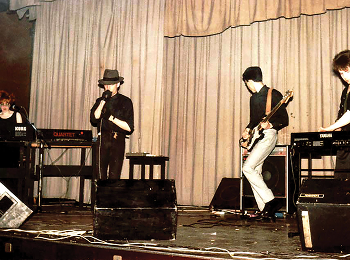
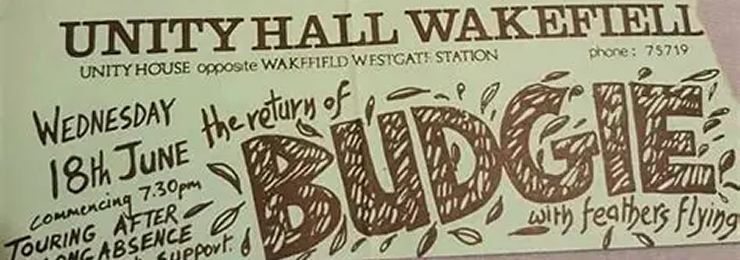
In the late 1970s and 80s, Unity Hall became a fixture on the UK live music circuit.
Legendary acts including The Pretenders (who debuted here), The Specials, Def Leppard, Eurythmics, Human League, and Iron Maiden performed to packed audiences. These performances secured its reputation as one of the most exciting live music venues in Wakefield.
1990s – Decline and Closure
By the 1990s, shifting leisure habits and high maintenance costs caused a decline in bookings. Events became less frequent, and the building eventually closed. Despite its Grade Il listing, Unity Hall spent more than a decade unused, its once-grand interiors falling into disrepair.


2011 – A Community Revival
A group of local residents, creative professionals, and heritage supporters came together to save Unity Hall. Through a pioneering community share scheme — alongside EU funding, Wakefield Council support, private investment, and heritage grants — over £4 million was raised for its restoration.
2014 – Reopening as Unity Works
A sensitive refurbishment preserved historic details while introducing modern facilities. The 600-capacity main hall was restored for concerts, theatre, and conferences. A smaller function room, meeting spaces, offices, studios, and shared work areas made it a hub for both cultural events and business space in Wakefield.
Today – Unity Hall & Business Space
Today, Unity Hall offers flexible workspace, conference rooms, and one of the most versatile event venues in Wakefield. It hosts live music, comedy nights, private celebrations, and corporate functions — all within a building that blends Victorian character with modern comfort. As a place to work, meet, and celebrate, Unity Hall remains a living part of Wakefield’s story and a key destination for venue hire, business events, and entertainment in the city centre.
Don’t just take our word for it, hear what our customers have to say.

Great venue for conferences and events! Highly recommend checking this place out.

Great space to watch events. As a side note it was extremely warm so you may need to take a fan.

Saw Skinny Living here in December for an intimate sit-down gig. It was a brilliant experience! The venue itself was accessible lots of parking nearby.